What is the Delta?
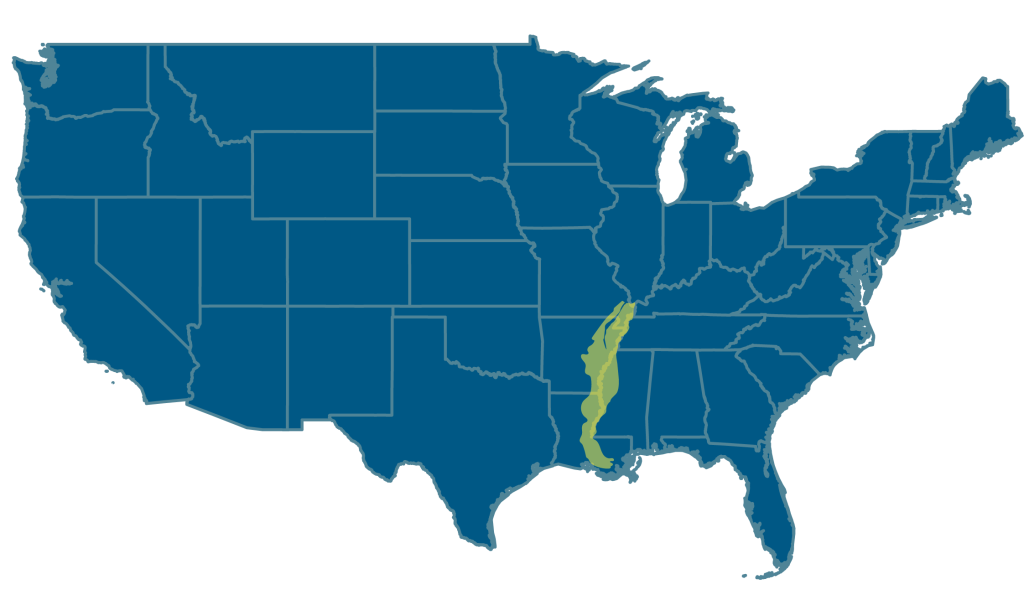
The Delta – also known as the Lower Mississippi River Valley – is the historic floodplain of the lower half of the Mississippi River. It stretches from the confluence with the Ohio River at Cairo, Illinois south to the Gulf of America – nearly 1,000 miles of meandering, mainstem river. Easily visible from space, the Delta is nearly 500 miles long and 100 miles across at its widest, covering more than 35,000 square miles (around 23 million acres). Along the way, it encompasses bits of Missouri, Kentucky, and Tennessee, and significant areas of Arkansas, Mississippi, and Louisiana. It’s a place where subtle differences in elevation result in surprising ecological variation. Here, everything is linked to water, and the rich soils deposited by repeated flooding across these lowlands support one of the most productive ecosystems in the country.
A Consquential History
Ours is a storied landscape: from the captivating earthen mounds built by historic Mississippian peoples; to the struggles, displacement, and perseverance of Native American tribes; to early European explorers who marveled at the vast, teeming, buzzing, formidable jungle; to ambitious, back-breaking efforts by determined settlers – and forced labor – to clear and cultivate; to the U.S. Civil War and its aftermath; to Teddy Roosevelt’s iconic hunt with Holt Collier (inspiring the “Teddy Bear”); to the drama of more than two centuries (and counting) of striving to control the mighty Mississippi River and its awesome floods; to game-changing advances, especially after World War II, in machinery and other agricultural technology.
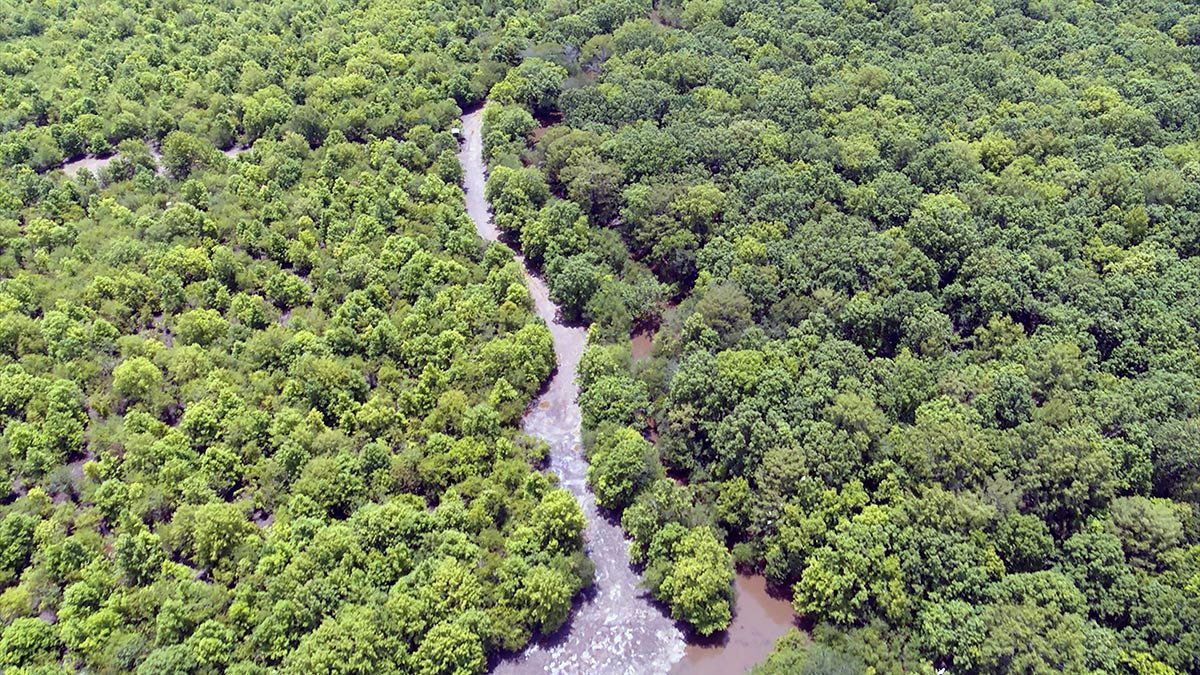
Before the arrival of Europeans, the Delta forest was the second largest forested valley in the world, second only to the Amazon rainforest. By the 1990s, the Lower Mississippi River Valley had been physically transformed into an agricultural powerhouse which grows eye-popping quantities of cotton, soybeans, corn, and rice. To get there, more than 80% of the original landscape was converted, primarily for industrial cropland – an estimated 19 million acres of forests and wetlands lost. Consequences of such dramatic change include tremendous reductions in wildlife populations, water quality, natural flood control capacity, and carbon sequestration.
Nowhere is the promise greater or the potential higher than in the Lower Mississippi Valley
SAM HAMILTON, FORMER SOUTHEAST REGIONAL DIRECTOR FOR THE U.S. FISH AND WILDLIFE SERVICE
We understand today that too much forest has been cleared in the Delta. This presents an opportunity that’s all upside: there’s room to work with private landowners to restore hundreds of thousands of acres of native forest, creating a host of additional benefits for people and the region, while still supporting our robust agricultural economy.
We appreciate the many organizations, investors, and landowners who have been collaborating on reforesting the Delta. Over the past 30 years, more than one million acres have been restored to forest. This is a great start, but we’re not done: At least one million more acres of native forest need to be restored here – the sooner, the better.
An Excellent Place to Plant Forests
The world needs more forests. The Delta, with its various natural and economic advantages, is the perfect place to grow them.
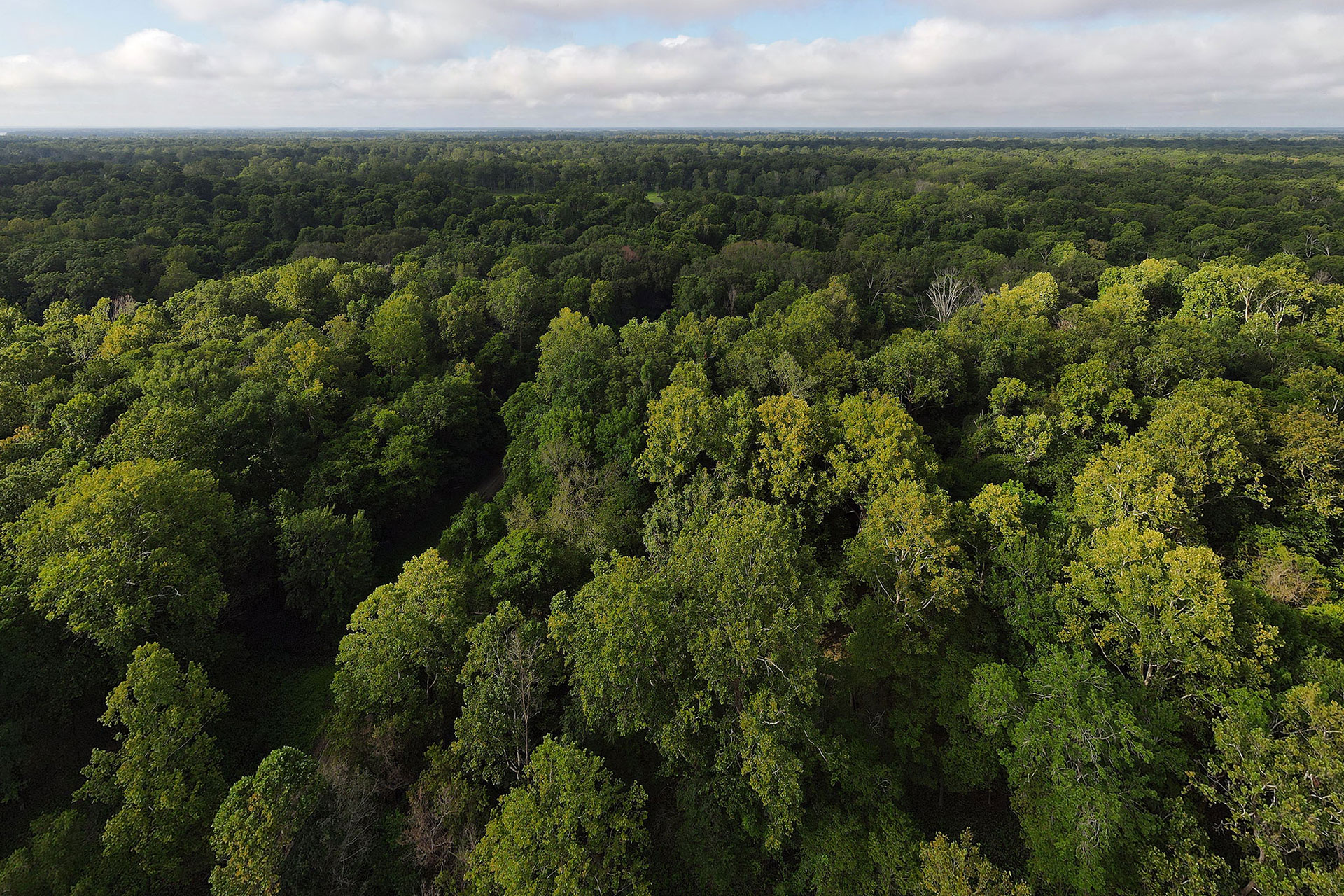
This region has long been recognized for its enormous potential to effectively sequester (absorb and store) atmospheric carbon in growing trees. Trees grow bigger and faster on the Mississippi River’s historic floodplain. Our native trees evolved to take advantage of the region’s great soils, ample water, and long growing season, sequestering from the atmosphere as much as 300 tons of carbon per acre over a 100-year period.
It costs less to plant and manage a forest here. We benefit from comparably low costs for supplies and labor. Our region boasts relatively low risk for what are known as “reversals” – the loss of planted forests – especially due to wildfires that wreak havoc across other regions of the U.S. In addition, strategic forest restoration in this region offers significant savings for taxpayers by putting marginal croplands to better use, breaking a frustrating cycle of commodity, crop insurance, and disaster payments. When it comes to reforestation across the Delta, more is better. There are several organizations pursuing reforestation in our region today, some for ecological reasons, others as investments. We welcome their efforts.
When it comes to reforestation across the Delta, more is better. There are several organizations pursuing reforestation in our region today, some for ecological reasons, others as investments. We welcome their efforts because, together, we need to dramatically increase the pace and scale of native forest restoration across the Delta.
When it comes to removing carbon from the atmosphere by forests, Mississippi Ranks #1 in the United States
U.S. FOREST SERVICE PUBLICATION ‘GREENHOUSE GAS EMISSIONS AND REMOVALS FROM FOREST LAND, WOODLANDS, AND URBAN TREES IN THE UNITED STATES, 1990-2018’
Benefits Beyond Carbon
The Delta is an excellent place to help the planet by restoring native forests. But just as important, local economic activity provided through forest restoration, coupled with the generation and sale of carbon removal credits, can have an outsized impact on the quality of life here at home. Such investments are desperately needed to help alleviate persistent social issues in our region, such as high rates of poverty, tragic health statistics, and inequality among historically underserved populations.
There are many ways to address the climate challenge. We support those that strengthen the economy, rather than harm it. Investments in reforestation in the Delta provide immediate economic opportunity and hope. The steady, forward-looking generation of carbon removal credits that can be sold brings the promise of future re-investments, setting up a virtuous cycle that will deliver for people, the economy, and the environment.
The Delta deserves your support. Learn more about what makes this place so special.