What is the Carbon Cycle
The chemical element carbon (C) is prominent in the air and in living things. Through what we call the “carbon cycle,” this essential element is cycled throughout Earth’s atmosphere, biosphere, land, and water. When plants and animals grow, they absorb carbon, locking it up in their bodies, leaves, trunks, and roots until that biomass decomposes and releases the carbon back into the atmosphere.
Animals, when respirating, take in oxygen and release carbon – as carbon dioxide gas or “CO2” – while trees and other plants take in CO2 and release oxygen. In the atmosphere, CO2 acts as an insulating “greenhouse” gas, trapping heat and helping to keep our planet from getting too cold. To maintain a state of equilibrium, the amount of carbon found in biomass, water, land, and our atmosphere must be in a healthy balance.

The Carbon & Climate Challenge
Unfortunately, it seems the carbon cycle is out of balance. Human activities such as the burning of fossil fuels and changing how we use our lands have resulted in an excessive amount of so-called greenhouse gases – especially CO2 – being released into our atmosphere, causing an imbalance and increasing warming to an undesirable level.
According to the EPA, in the U.S. in 2022: the Transportation sector was responsible for 28% of all “greenhouse gas” emissions; Electricity Production 25%; Industry 23%; Residential & Commercial 13%; and Agriculture 10%.
What is Causing the Carbon Cycle to be Out of Balance?
Land use change is one of the main causes of carbon cycle imbalance and represents approximately 25% of all carbon dioxide emissions globally. There has been a lot of land use change in our region.
Farmed land is considered a net carbon “source.” There are ways that farmers can reduce their emissions and ways they can encourage more carbon to remain in the ground. But on an average acre of land, farming practices release more carbon into the atmosphere than is held by the soil and plant growth.
What are the Effects?
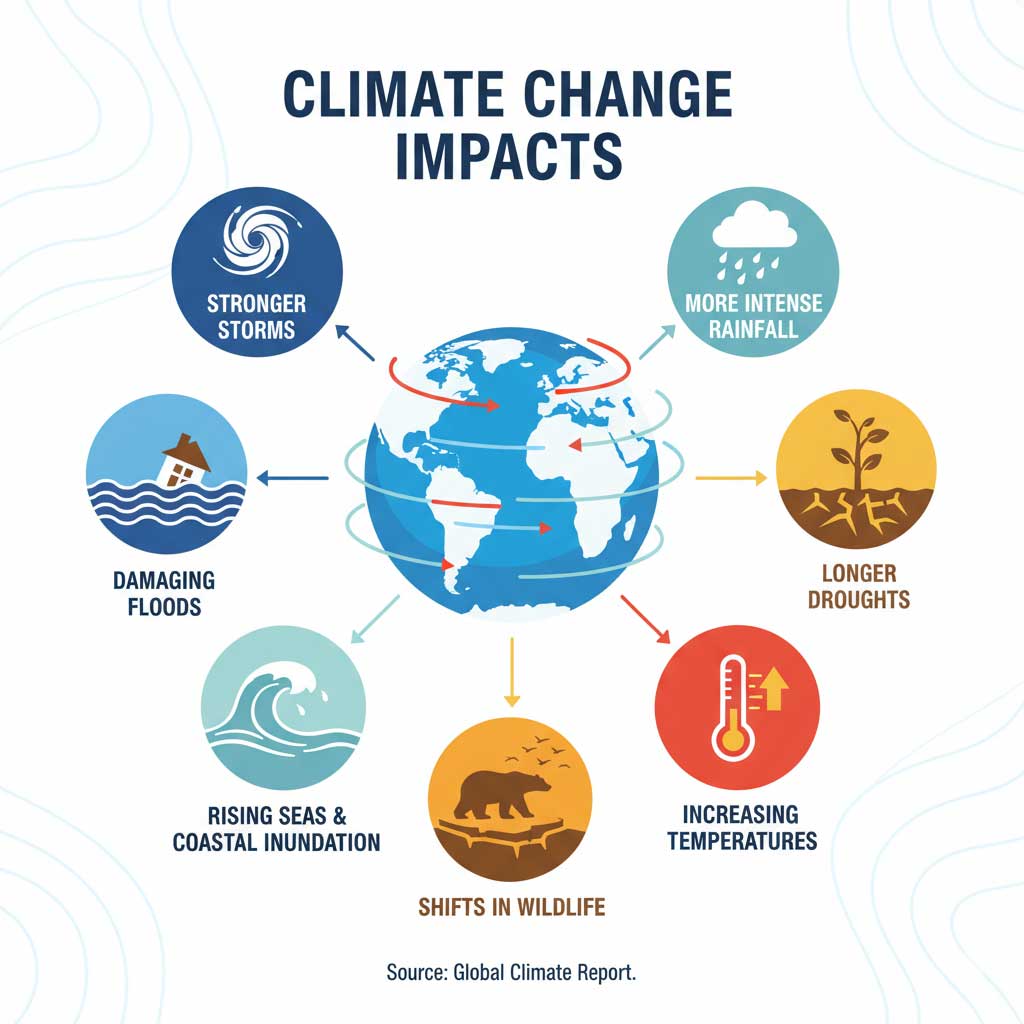
The concern is that a shifting global climate is responsible for stronger storms, more intense rainfall, more damaging floods, rising seas that inundate coastlines, shifts in wildlife populations, increasing temperatures, and longer droughts.
In our region, hunters, anglers, and other outdoor enthusiasts, attuned to stresses on fish and wildlife populations and their habitats, are already seeing firsthand significant, negative impacts on our farms and forests, prairies and grasslands, rivers and streams, and coastlines. Many contend, for example, that waterfowl arrive later on the wintering grounds along the Mississippi Flyway than they used to. Mississippi River flooding appears to be lasting longer and becoming more destructive. We worry that hurricanes may be an increasing threat along the Gulf Coast.
All of these could harm homeowners, landowners, farmers, businesses, sportsman, and, ultimately, our region’s economy. Rather than wait and see, we support smart, active solutions that preserve – and even enhance – our communities, our economy, and our quality of life. At the same time, moving too quickly to reduce carbon emissions could have an unnecessary negative impact on the economy.
Solutions – What can we do?
One thing we can do is reduce emissions of greenhouse gas pollution through technological innovation and improved efficiency. This can include reducing waste, better-insulated buildings, using less fossil fuel, and developing clean alternative energy sources.
We can also take greenhouse gases back out of the air. Carbon sequestration is the permanent or long-term removal of carbon from the atmosphere. Humans might figure out an effective way do this with technology. But plants do this now, removing carbon dioxide from the air and storing it as they grow.
Natural Climate Solutions
“Natural Climate Solutions” are those that advantage of what nature does to better manage the Carbon Cycle. This includes growing trees to sequester (absorb and store) carbon from the atmosphere. Such natural climate solutions have the potential to mitigate one third of greenhouse gas emissions needed to achieve “net zero” globally (referring to estimates of what it would take to recover a more balanced Carbon Cycle).
Trees are one such solution. A healthy growing forest is a carbon “sink” that absorbs carbon – a LOT of it. About one‑half of the dry weight of a tree is carbon, which it captures long-term in its trunks and limbs, in its roots, and even in timber products. Plus, if you establish a native forest with tree species adapted to your area, you’ll enjoy a host of ancillary benefits, including food and shelter for wildlife, cleaner air, improved water quality, and more.
See the infographic on The Natural Boom & Bust of Forest Carbon (pdf) by the USDA.
Support the Delta
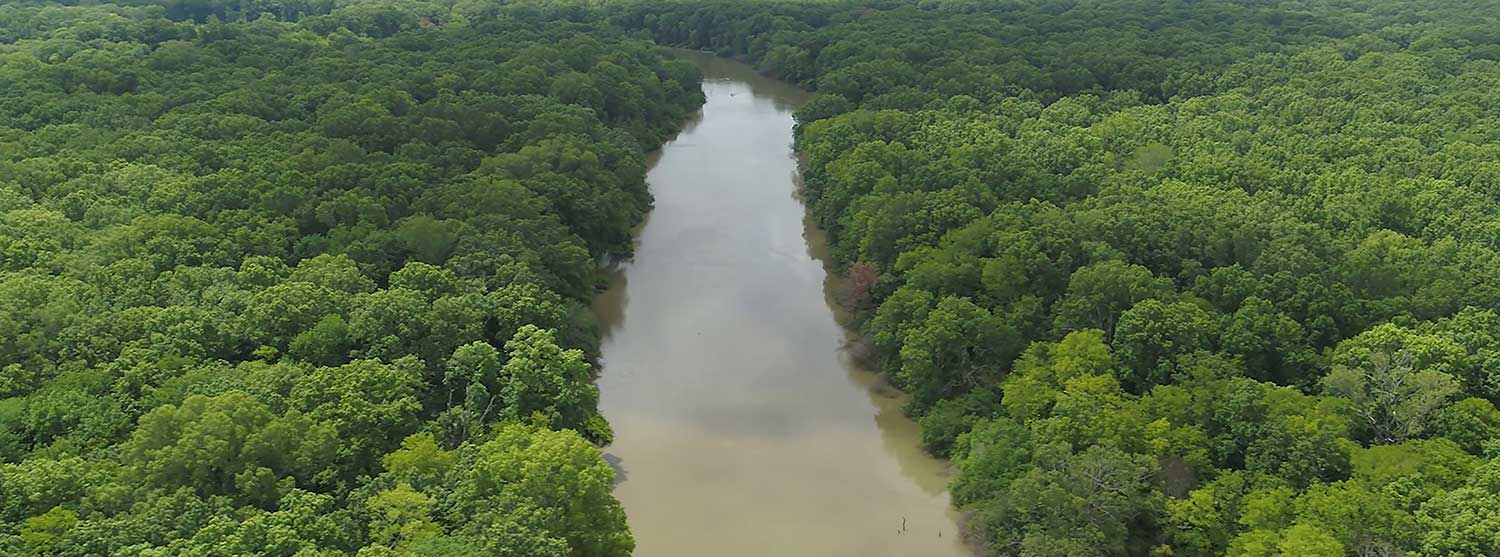
Your support of forest restoration advances social, economic, and environmental benefits in the Lower Mississippi River Valley – as well as a healthier planet.
Funding for Natural Climate Solutions
So, planting trees – especially large tracks of native forest – is an excellent way to address the challenge of an unbalanced global carbon cycle. But this introduces another challenge: It costs a lot to get started. It costs money to plant trees, to manage forests, and to forgo crop or timber harvest revenue for the sake of building carbon biomass reserves (i.e. letting the trees grow). The upside: pursuing natural climate solutions like reforestation brings a host of other benefits for people and wildlife.
What if there was a way to motivate investors to sponsor forest restoration? There are people and organizations that would like to fund natural climate solutions such as forest restoration, but who may need something in return: a satisfactory financial return on their investment, or some kind of guarantee that their investment in a project will give them credit for reducing atmospheric carbon. Enter “carbon removal credits” and “carbon markets.”
Carbon Credits & Markets
Carbon markets facilitate the buying and selling of carbon removal credits. Here we’re referring to what is known as the “Voluntary Carbon Market,” which, as the name suggests, is open to individuals, companies, and other organizations that want to reduce or eliminate their carbon footprint, but are not necessarily required to by law.
What is a Carbon Credit?
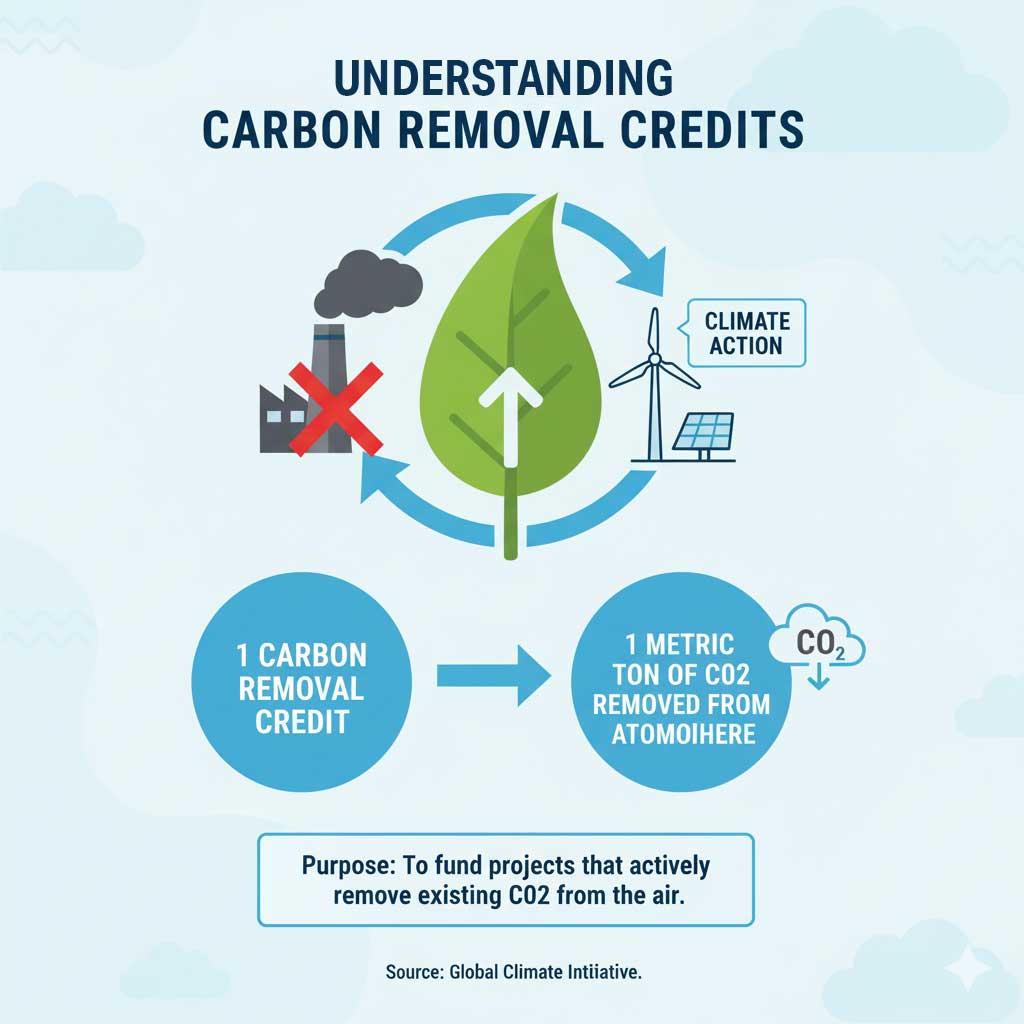
A carbon removal credit, or carbon offset, is a credit that a person or organization can buy to decrease their “carbon footprint” – i.e. to offset the carbon dioxide or other “greenhouse gasses” emitted by their activities. One carbon removal credit represents one metric ton of CO2 removed from the atmosphere. If you can prove that you’ve removed carbon from the atmosphere, you can then sell that result to a willing buyer.
(There are also compliance-based, industry-focused systems for monitoring and controlling carbon emissions. Under these regulatory schemes, sometimes referred to as “cap and trade,” a government issues a limited number of “carbon credits” to private entities in order to control the total amount of emissions. The regulated entities may be able to trade or purchase credits as they strive to comply with established emissions caps.)
Over the years, systems have emerged to organize, guide, and legitimize the Voluntary Carbon Market. Registries are organizations that track and manage carbon removal credits, ensuring transparency and accountability in carbon offset projects. A carbon registry serves as a database that records the creation, sale, and retirement of carbon credits that meet their standards and follow their protocols. In addition, entities known as “validation and verification bodies” are tasked with independently validating that a carbon sequestration project (such as reforestation) meets a registry’s standards, as well as verifying specific claims for carbon reduction credits.
The process for a Voluntary Carbon Market project may look something like this: A project is proposed – perhaps restoring hundreds of acres of private land from row crop production back to native forest. Someone fronts the significant funding necessary for incentive payments to the landowner, professional planning, preparing the land, acquiring and planting the seedling trees, registering the project with an established carbon registry, and the ongoing forest monitoring and management to comply with the registry’s protocol. After perhaps 5 or so years, this fledgling forest project can start to claim “removal credits” (or “offsets”) for the carbon sequestered from the atmosphere in the wood of the growing trees. These claims for a specific amount of carbon stored in new wood must be verified (which costs more money) as a legitimate contribution to solving the carbon climate challenge. Once confirmed, the new credits are officially issued by the registry, at which point they can either be retired by the initial investor to offset some of their own carbon emissions, or sold to recoup investments made in the project to date. As the trees get bigger over time, more carbon removal credits can be claimed.
Carbon in Conclusion
There is a lot of concern that the increasing volume of carbon dioxide (and other greenhouse gasses) in our atmosphere has consequences for our shared global climate, negatively impacting people and wildlife. To address the issue, many people and organizations seek to carry out or invest in natural climate solutions, such as planting trees and restoring forests.
The Voluntary Credit Market provides a mechanism for investors to fund expensive but worthy forest restoration: Those who do the work of thoughtfully growing more trees and new forests can periodically qualify for a round of verified carbon removal credits which can be sold to companies, utilities, and others who want to purchase them (perhaps to help them meet net zero carbon goals).
We believe that conservation and economic interests must work together if we are to find lasting solutions, and that the world can meet and solve the global climate challenge in a manner that is economically sustainable. The United States can lead to ensure actions are taken worldwide to reduce carbon emissions in an economy-friendly manner. The Delta is a great place to do it!
We also believe that economic activity – including planting and caring for forests – can and should help alleviate persistent ecological and social issues across our region.