We are building an incentive-based program to reward landowners in the Lower Mississippi River Valley region for planting and preserving native bottomland hardwood forests. Our goal is to restore thousands of acres of forest on private lands throughout the Mississippi River Delta region in a way that supports landowners and can generate income – through the future sale of carbon removal credits – to help cover costs.
Why?
We’ve lost too much of our native Delta forests, with significant consequences for wildlife, water quality, soil erosion, and more.
But we can recover – and private landowners like you hold the key.
What’s In It For You?
Payments & Tax Benefits: When establishing a new forest, we will cover the costs – and pay you a per-acre incentive! We’ll also help you pursue significant tax benefits based on the value of the donated conservation easement – so you can keep more money in your pocket.
Simplicity & Economic Stability: No more worrying about how to manage or invest in your land.
An Enduring Legacy: You and your heirs will retain ownership of and access to your land.
Your Own Private Forest: You and your family can enjoy the wildlife, beauty, and many other benefits of your healthy, growing forest.
Contact Us If …
You are interested in establishing bottomland forest on some or all of your Delta property, or getting tax benefits for permanently protecting forest on your land.
You have applied for a conservation incentive program – such as the NRCS Wetland Reserve Easement (WRE) program – but your parcel(s) have not been selected.
You have trees planted through the FSA’s Conservation Reserve Program (CRP) and would like to benefit from a permanent easement on the property.
Your land has proven to be a challenge to farm due to flooding or other issues, perhaps resulting in claims for financial relief such as commodity, crop insurance, and/or disaster payments.
Your Land May be Eligible …
If it is currently unforested, especially if categorized as Class 3 or Class 4 soils or as “Farmed Wetlands.”
If it is not currently enrolled in a conservation easement program.
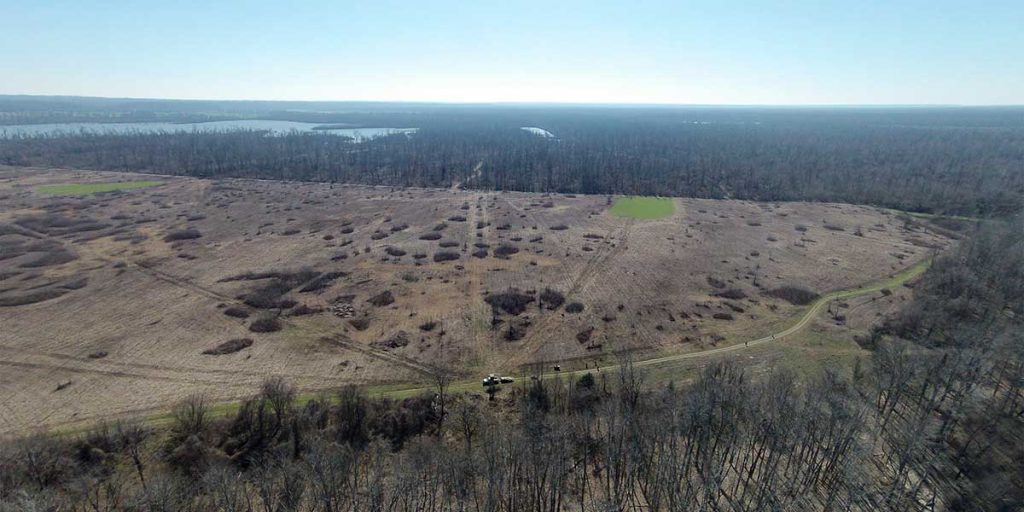
If it will soon exit – or recently exited – a CRP reforestation program, especially if at risk of conversion (ex: cutting the planted trees down to resume agriculture).
How It Works
We meet with you to determine if your land is a good fit and we can support your long-term vision for the property. If so…
We work with you to develop an appropriate, professional forest planting and/or management plan.
If planting trees:
- We arrange for land prep and planting of native bottomland hardwood seedlings, covering all associated costs.
- You receive a one-time, per-acre incentive payment.
You donate a perpetual conservation easement on the property.
- Easements are necessary to protect the growing forest and its carbon values in perpetuity. Without such guarantees, the landowner cannot pursue financial advantages, and the property can’t be enrolled in a forest carbon project.
- These voluntary legal agreements are officially recorded in the county of record.
- You and your heirs retain ownership (title) and access to the land – you can still hunt, fish, and enjoy your growing forest. The easement simply limits certain development, harvest, or other activities, as agreed upon in advance. There is no public access unless you choose to include that in the agreement.
- The nonprofit organization holding the required conservation easement on the property will be responsible for monitoring the forest and conducting any necessary adaptive management (to maintain forest health and carbon values) over time.
- The landowner hires an experienced easement consultant and a professional appraiser to handle all necessary data collection and paperwork. The process can involve significant costs, but those costs will be greatly outweighed by the value of the easement, which can be written off on your taxes.
- Federal law allows you to deduct the value of the donated permanent conservation easement, spread across up to 16 years. Farmers can deduct up to 100% of their annual income each qualifying year; non-farmers can deduct up to 50% of their income each year.
- You may also be able to reduce state, local, and federal estate taxes.
- We recommend you consult a tax professional to determine how to make such an opportunity work best for you and your family.
- The process typically takes three to six months. We’ll support you throughout, as well as in pursuing the tax benefits you deserve for the value of the donation. We want the experience to be as smooth as possible for you.
For properties successfully enrolled in a forest carbon project, we will periodically conduct surveys and field verifications as required by the process for issuing carbon removal credits.
Questions?
Don’t hesitate to get in touch.
We want to help you take advantage of these opportunities.